EU Peers international project meeting in Budapest
According to the new European Union requirements (EPBD legislation), all member states must open and operate independent one-stop renovation advisory points in each region or county, and must also ensure coverage of rural and disadvantaged regions. This is why it is particularly important that organizations dealing with OSSs from eight countries gathered in Budapest to exchange knowledge and experience on the current situation and development opportunities for one-stop-shops.
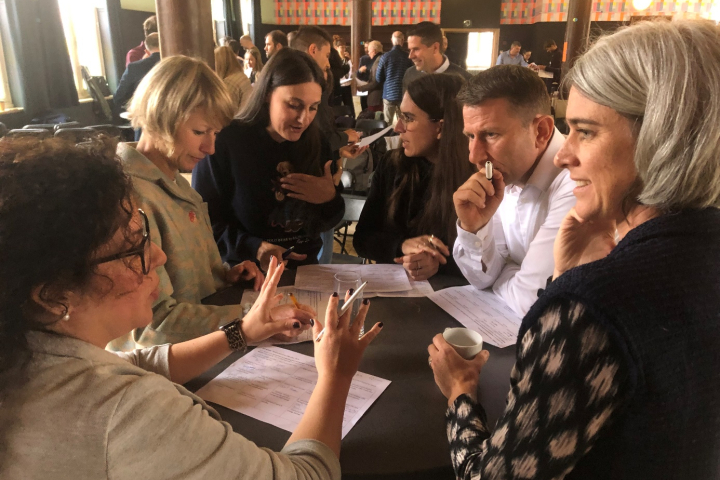
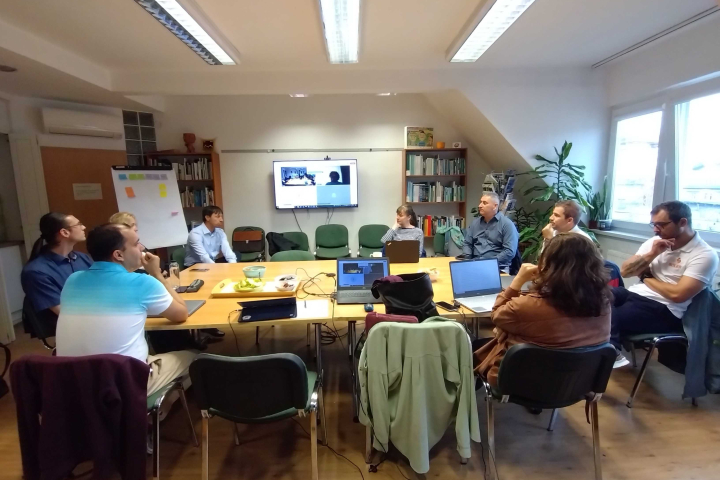
Members of the EU Peers consortium met for the fifth time - this time in Budapest-, to discuss the most important developments and tasks related to one-stop shop (OSS). During the two-day gathering, organized by Energiaklub Climate Policy Institute and held at the headquarters of Velux Hungary on Andrássy Avenue (which was awarded the title of Office of the Year), the partners reported on the development of the national OSS community, the most important proposals related to OSS and modernization were developed, exchanged experiences on financial products that encourage energy renovations, and discussed tasks related to new OSSs, including the study visits within the frame of the mentoring programme.
National proposals for one-stop shops
It is very important that Member States, in line with the requirements of the European Union, establish an effective OSS network that provides independent, free technical, financial, and administrative advice, assists in the selection of reliable contractors, supports condominiums in modernization, and conducts energy efficiency campaigns to encourage renovations. However, it is worth considering what the most appropriate framework is in each Member State: what organization(s) should provide the OSS services and to what extent, how to deal with energy poverty, how to recommend reliable contractors, who should finance the network and what expectations should be set for advisors, as well as how to support the operation of OSSs through data access and campaigns. After considering these aspects, 14 policy proposals were developed in four areas, which countries can adapt to their own local conditions, with the help of construction industry roundtables organized by member states. The participants also discussed methods of lobbying at the European and national levels.
Knowledge sharing, and the mentoring programme
The EU Peers mentoring program is currently ongoing to assist one-stop shops, providing support, real-life examples and presentations on various topics (e.g., quality assurance, energy poverty, business models, motivating renovators, etc.) to help novice OSS advisors. The recent takeaways of this programme to date have been discussed, and there was a brainstorming session to provide new ideas and to help with future sessions.
The EU Peers campaign for cities and regions has been running since mid-October, gathering arguments for why it is worth to open a one-stop shop in a municipality and how the OSS can support local economic development. As part of the campaign, a study trip to assist local governments will take place in four countries (Hungary, Ireland, Italy, and Lithuania) at the beginning of next year, where experts will be able to develop their knowledge of one-stop services during a two-day long personal program. The details of the study trip were also discussed by the consortium partners.
Financial products to encourage renovations
Besides the lack of information, the most significant obstacle to renovations is the scarcity of financial resources. In the European Union, the financing needs for building renovations are significant: achieving the energy efficiency targets set for 2030 would require more than €300 billion in annual investment, which cannot be covered by public funding alone. Therefore, it is quite important that the partners reported on the effective state and municipal renovation subsidies and credit options available in their countries, as well as on innovative private financing options and their legal background. Based on the good examples, support programs, and alternative financing experiences collected in the various Member States, a training program will be developed to further educate national OSSs and the financial institutions that support them on effective and innovative financial products, their development, and their expansion.
Additional topics, networking
In addition to advocacy initiatives, capacity building, and financial products, the consortium members also reported on the development and difficulties of national OSS communities, as well as discussed ways to make internal and external communication more effective, and reviewed the details of a planned questionnaire survey among EU Peers members and the content of the project summary video. During the two days, the project partners also had the opportunity to become familiar with delicious Hungarian cuisine and drinks, visit the downtown Christmas market, and meet with the Hungarian community members to exchange experiences.
The Budapest meeting was not only another milestone, but also a reminder: the work ahead of us is challenging, exciting, but also necessary and essential. Fortunately, the EU Peers consortium brings together a wide range of expertise and ambition, with members helping each other with ideas, enthusiasm, knowledge sharing, and humor. 
The EU Peers project (101120790 LIFE22-CET-EU Peers) is implemented with the support of the European Union’s LIFE Programme.