Proposals for the Nationwide Expansion of One-Stop Shops Discussed at the 10th Meeting of the Hungarian EU Peers Community
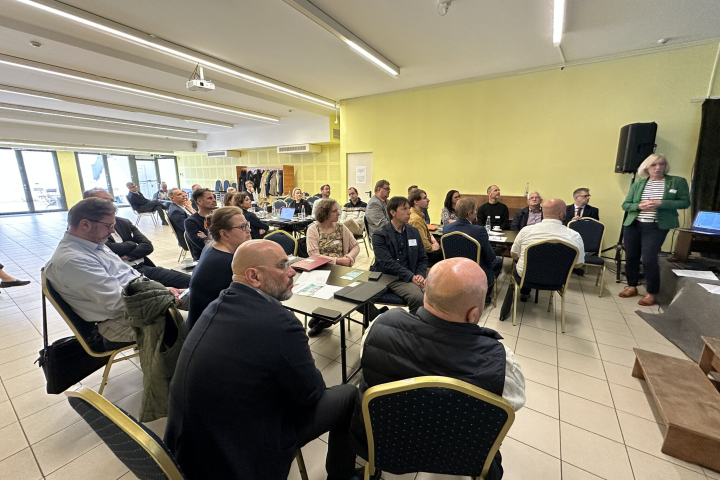
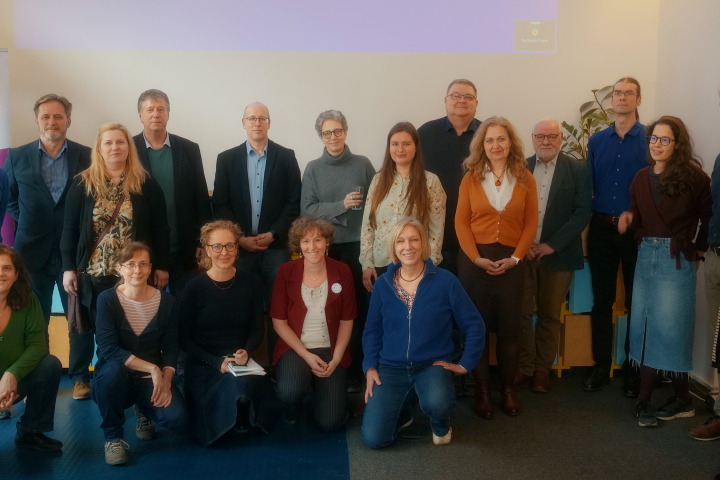
On 25 June, Hungarian one-stop shop (OSS) advisors and supporting organisations gathered for the tenth time at a meeting organised by the Energiaklub Climate Policy Institute. Building on practical experience from across the sector, participants collected, reviewed and discussed a set of proposals aimed at supporting the nationwide expansion of one-stop shop services in Hungary.
As the newly established Ministry of Economy and Energy is already preparing Hungary’s National Building Renovation Plan, in which the development of an OSS network is expected to play a central role, it was considered timely to gather recommendations from existing market-based OSS providers, discuss them collectively and seek common ground on more controversial issues.
Among the key topics discussed were the establishment of a three-tier OSS network (national, county and local levels); identifying appropriate models for single-family homes, multi-apartment buildings and energy-poor households; the qualifications, skills and training opportunities required for advisors; and the scale and sources of OSS funding (state, county, municipal authorities, market revenues, etc.).
Participants broadly agreed on the importance of county-level territorial coverage, although there is currently a lack of organisations in Hungary with the necessary capacities and expertise to fulfil this role. There was also consensus that the network should consist of certified one-stop shops, including both long-established market-based providers and newly established organisations.
One-stop shops supporting energy-poor households should also possess social support competencies and provide comprehensive assistance throughout the renovation process, similarly to Habitat for Humanity Hungary’s Falusi LakHatás programme. Participants did not support making OSS involvement mandatory for accessing renovation grants. However, they proposed creating stronger financial incentives for households choosing OSS services, such as higher certified energy savings (HEM) values, reduced VAT rates, lower-interest loans, higher subsidy intensity or other financial advantages. Homeowners working with an OSS are more likely to undertake deeper renovations and achieve higher-quality outcomes.
The issue of utility bill subsidies was also raised several times during the gathering. According to participants, part of the existing subsidy system could be redirected towards renovation programmes and the long-term operation of the OSS network – thereby reducing energy costs in a more sustainable way.
Another important task for the new ministry will be restarting the renovation support programmes that were suspended earlier this year. Right now, there are no active renovation support schemes available for either single-family homes or apartment buildings. In recent years, policy support has focused primarily on single-family homes, most notably through the Home Renovation Programme, which required applicants to achieve at least 30% energy savings.
While the programme included several forward-looking elements, a number of design features significantly limited accessibility. As a result, participation remained far below the number of households that would have been eligible. Together with the EU Peers members, Energiaklub reviewed which elements of the programme should be retained and which should be revised to ensure that substantially more households can benefit in the future. Key recommendations included introducing a much simpler online application process, removing the obligation to take out a loan, and increasing the level of financial support, as well as creating stronger incentives for deep renovations, and allowing grant application costs to be eligible expenses. Moreover, establishing a nationwide one-stop shop network, supported by a dedicated awareness-raising campaign.
Energiaklub and the Hungarian Energy Efficiency Institute (MEHI) committed to submitting both the OSS recommendations and the Home Renovation Programme proposals to the newly appointed Deputy State Secretary responsible for energy efficiency and decarbonisation within the coming weeks. The organisations will also represent the joint recommendations during future public consultation processes.
The meeting concluded with a discussion about the future. Although the EU Peers project will come to an end in August, European LIFE funding will continue from September through the EU Peers II project. The new programme will further strengthen national communities, support the development and consolidation of national OSS networks, and expand knowledge exchange to additional countries. New project partners will include Slovenia, Croatia, Poland and Bulgaria. This development is particularly valuable for Hungary, as these Central and Eastern European countries share many similarities in terms of building stock, financing conditions and homeowner motivations. As a result, many of the successful approaches and solutions developed in these countries might also prove highly relevant and transferable to the Hungarian context.