From the National to the Local Level – Everyone Has a Role to Play
From the national to the local level, from ministers to ordinary citizens, everyone has a role to play in mitigating the far-reaching social and economic impacts of increasingly frequent heatwaves and droughts. And one of the best ways to do this is to harness the power of nature.
We explored these challenges and potential solutions last week at the “Adaptive Western Transdanubia” regional conference in Szombathely, where our project was featured in two presentations.
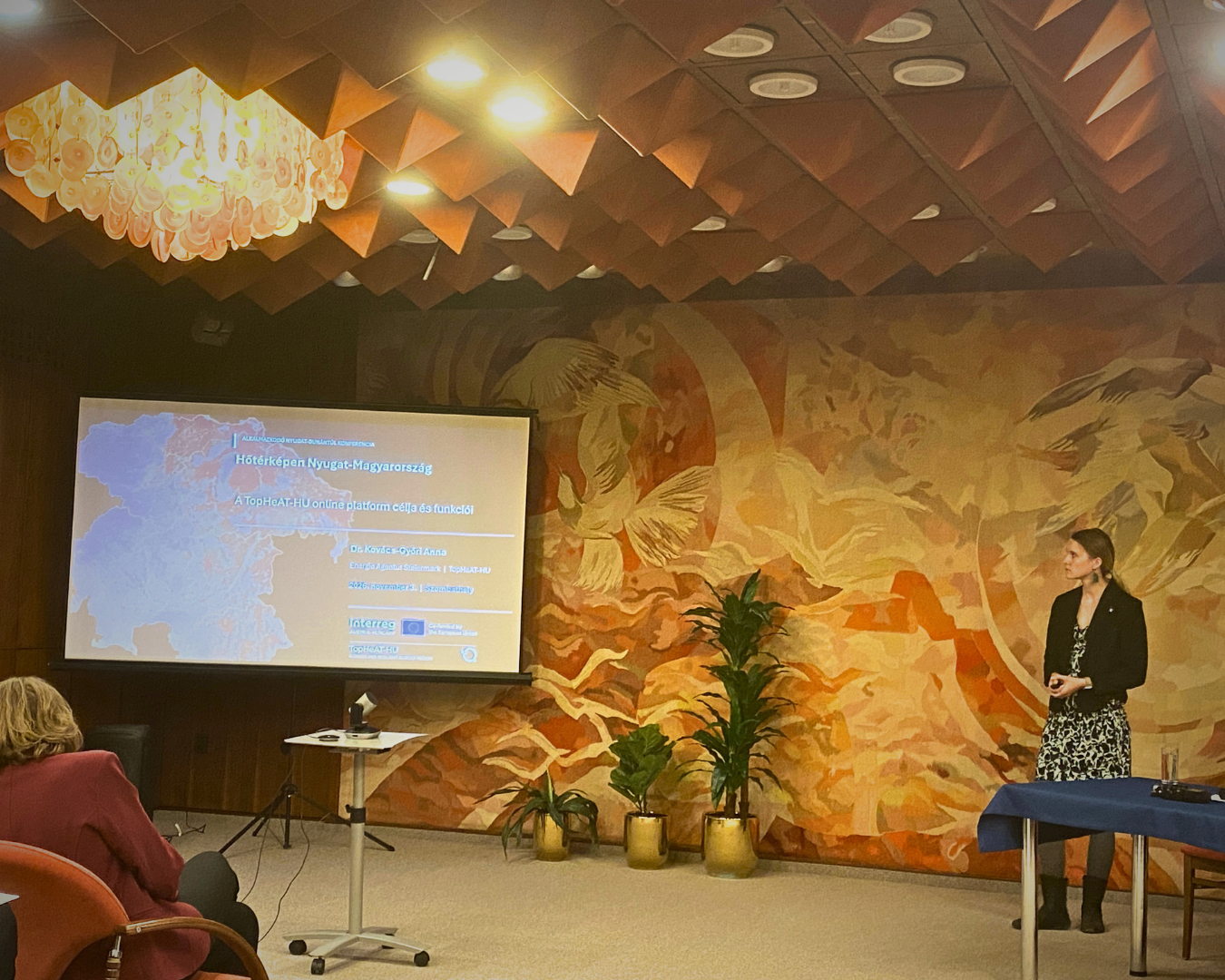
Anna Kovács-Győri, project manager at the Styrian Energy Agency, presented an interactive heat-mapping platform that allows users to explore heat-related data from the past ten years across the Austrian–Hungarian border region at a spatial resolution of 30 metres. The platform shows which parts of towns and cities experience the highest temperatures, which areas struggle to cool down at night, and where persistently high levels of heat stress occur.
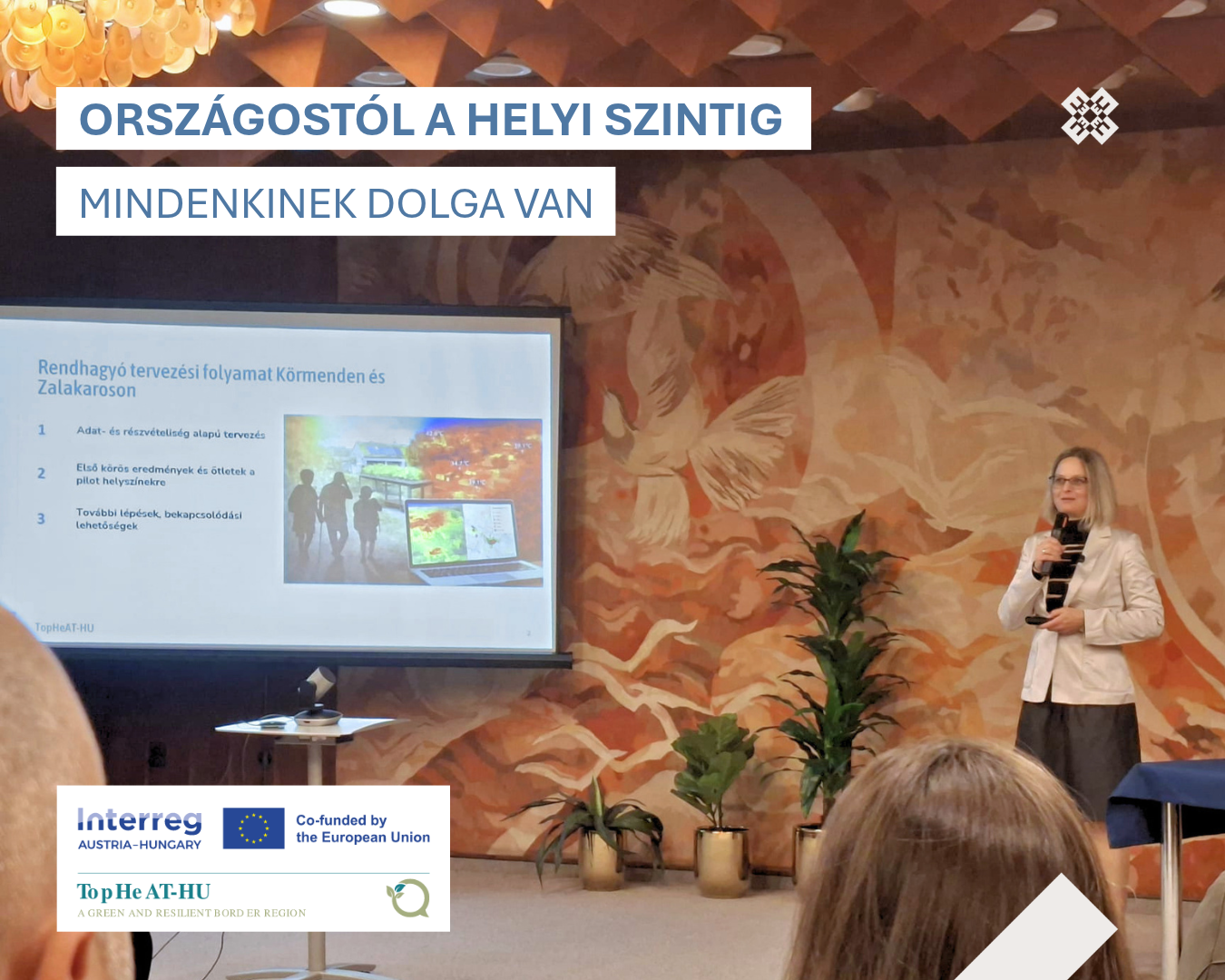
Zsófia Pej, Head of the Climate Programme at the Energiaklub Climate Policy Institute, explained how these data can be translated into concrete local development projects. In the two Hungarian pilot areas of the TopHeAT-HU project, Körmend and Zalakaros, we will use nature-based solutions to reduce urban heat stress. The planned pilot projects include vegetation-shaded public spaces and solutions that make use of water's cooling effect. In developing the final designs, we will draw not only on satellite and thermal camera measurements, but also on the experiences and suggestions of local residents.
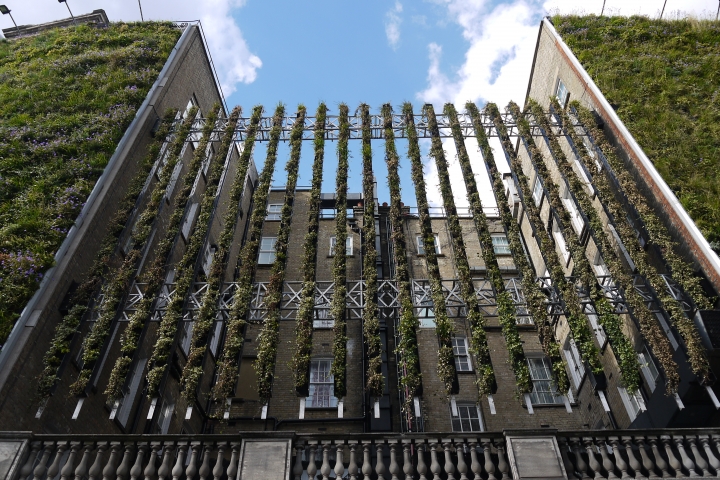
As summers become hotter – or, in meteorological terms, as the number of so-called “hot days” increases – and the Carpathian Basin grows drier, the amount of green space in our towns and cities matters more and more. Changing climatic conditions have made urban greening increasingly important. Trees provide shade and cool their surroundings through transpiration, vegetated surfaces heat up less, and retaining rainwater where it falls can help tackle both heat and water scarcity. All of this matters for public health, the usability of public spaces, and the liveability of our communities.
Many factors continue to make it difficult to address the challenges of climate change. While many people no longer dispute that climate change is happening, they underestimate its consequences. Others see the necessary measures as being at odds with economic development, or regard individual survival as the only way forward. Under these circumstances, building broad public support and bringing about meaningful change can seem almost insurmountable. Yet there was a time when securing women's right to vote or achieving international cooperation to tackle ozone-depleting substances seemed just as daunting. Both showed that collective action can bring about changes that once seemed unimaginable. If those efforts succeeded, we can make climate adaptation work too!
Here are a few useful resources for anyone who would like to explore the topic further:
🌍 HungaroMet – historical climate data, indicators and future climate projections: https://klimadat.met.hu/
🌡️ Heat stress in Western Hungary over the past ten years, mapped in high resolution: https://topheat-hu.termatics.com/
🐝 Let's take action! – community action with Beeco: https://www.beeco.hu/
🌱 Examples of good practice in nature-based solutions: https://unalab.eu/en