Pilot Sites Through a Thermal Camera
The summer of 2026 brought plenty of hot and dry extremes. To take just the most striking example: according to measurements by HungaroMet Nonprofit Ltd., the nationwide average temperature in August was 24.9°C, 3.7 degrees above the 1991–2020 average – and that is not even compared with the pre-industrial period! This made it the hottest August, and at the same time the hottest month, recorded in Hungary since the beginning of the 20th century.
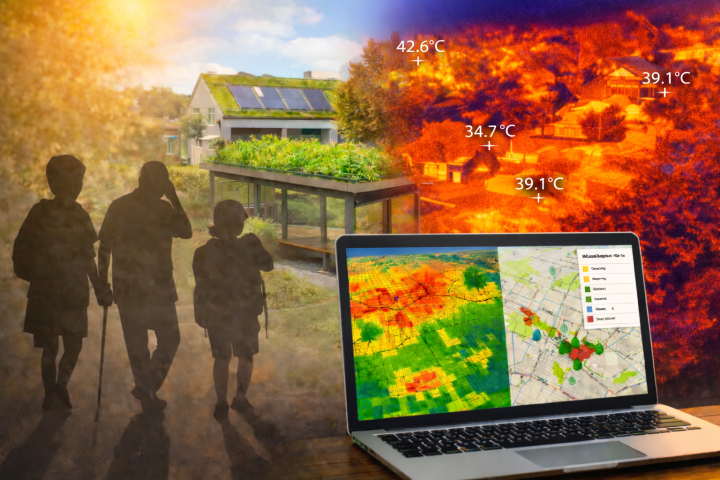
It was not difficult to find hot days for the heat walks we organised in Zalakaros and Körmend as part of our TopHeAT-HU project. The aim of these walks was to assess public spaces from the perspective of thermal comfort, allowing local residents to contribute to selecting locations for planned nature-based interventions designed to reduce heat stress. One of the tools used during the walks was a thermal camera, which can measure the surface temperature of shaded and sun-exposed surfaces.
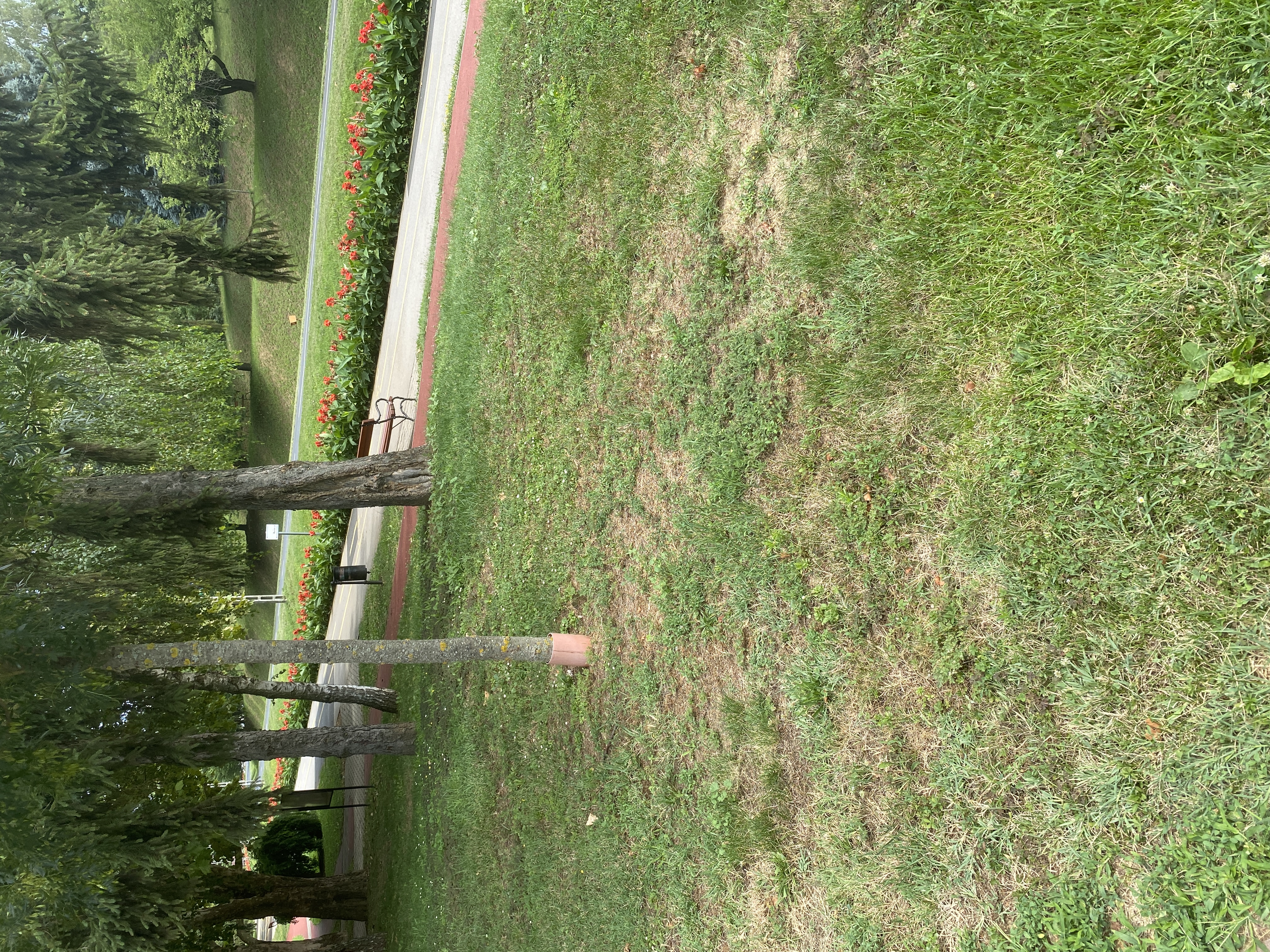
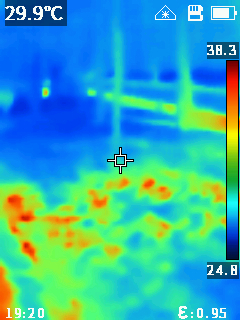
One surprise in Zalakaros was the small bare, grassless patches within the still-green lawn, which heated up even more than paved surfaces: with an air temperature of 30°C, they had already reached 38°C around midday.
 |
 |
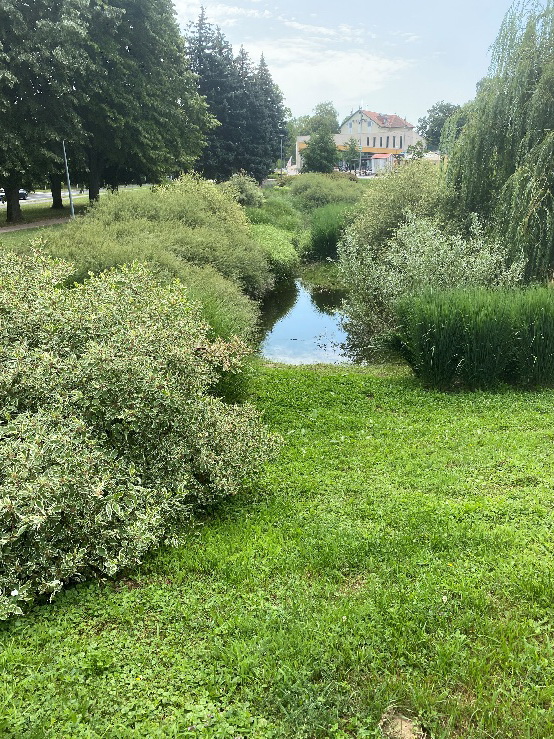
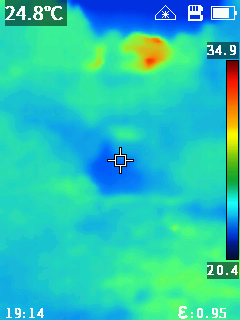
A nice counterexample, however, was the town’s sustainable stormwater infiltration system, where rainwater from a few days earlier was still pleasantly cooling its surroundings even on a scorching heatwave day:
 |
 |
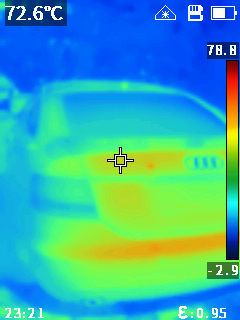
During our walk in Körmend in the early afternoon, the hottest surface we encountered was, unsurprisingly, a black car, whose surface had heated up to over 70°C – hot enough that we could have almost fried an egg on it.
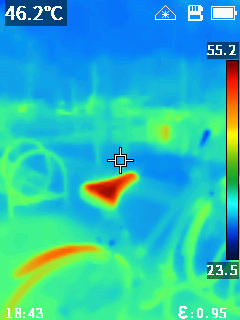
Covered bicycle storage isn't just useful for rainy weather – which, unfortunately, is becoming increasingly rare. When parked in direct sunlight, bicycle saddles heat up dramatically: