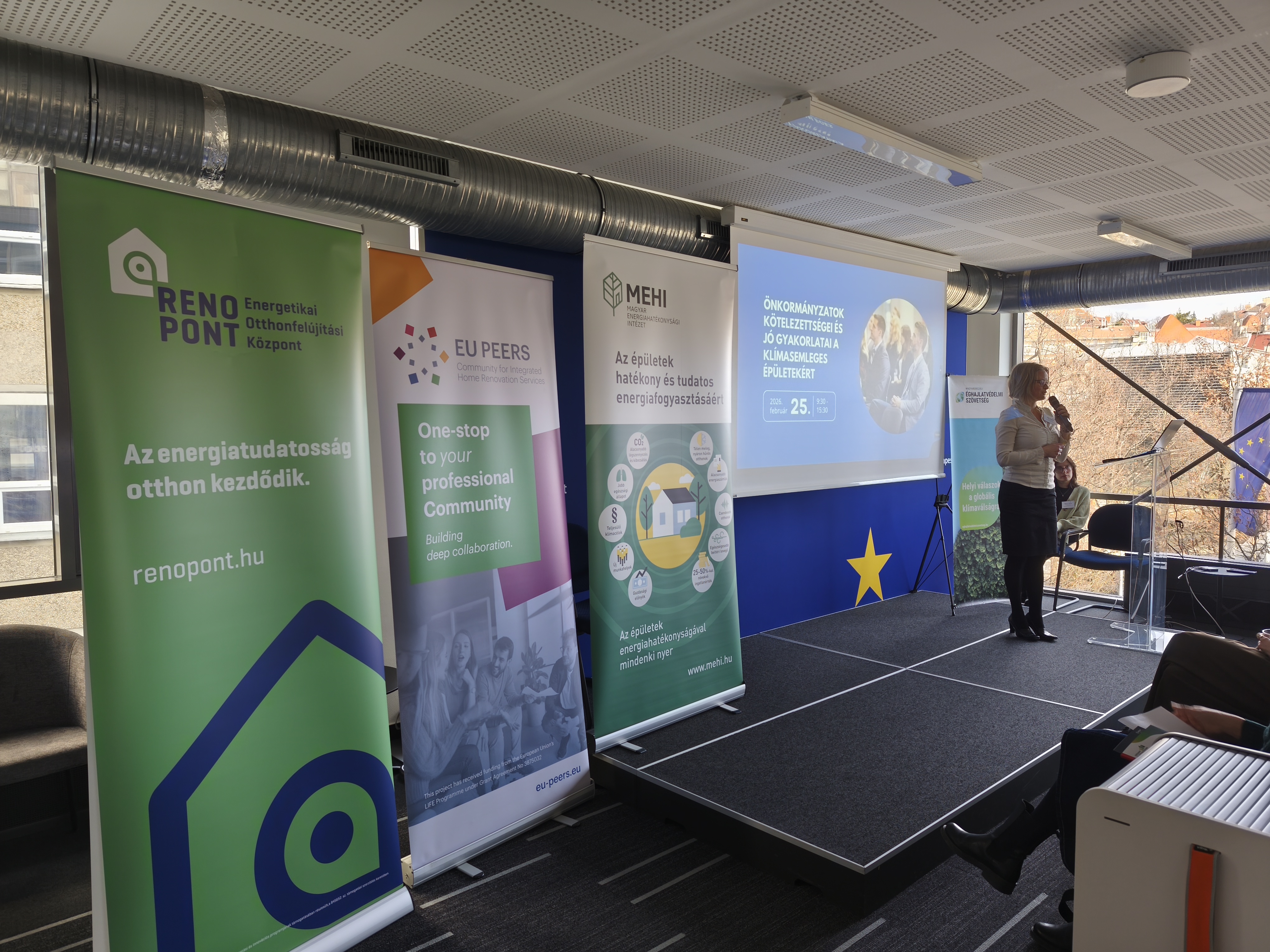
A full-house municipal conference organised by Energiaklub Climate Policy Institute, the Hungarian Energy Efficiency Institute (MEHI) and Climate Alliance Hungary
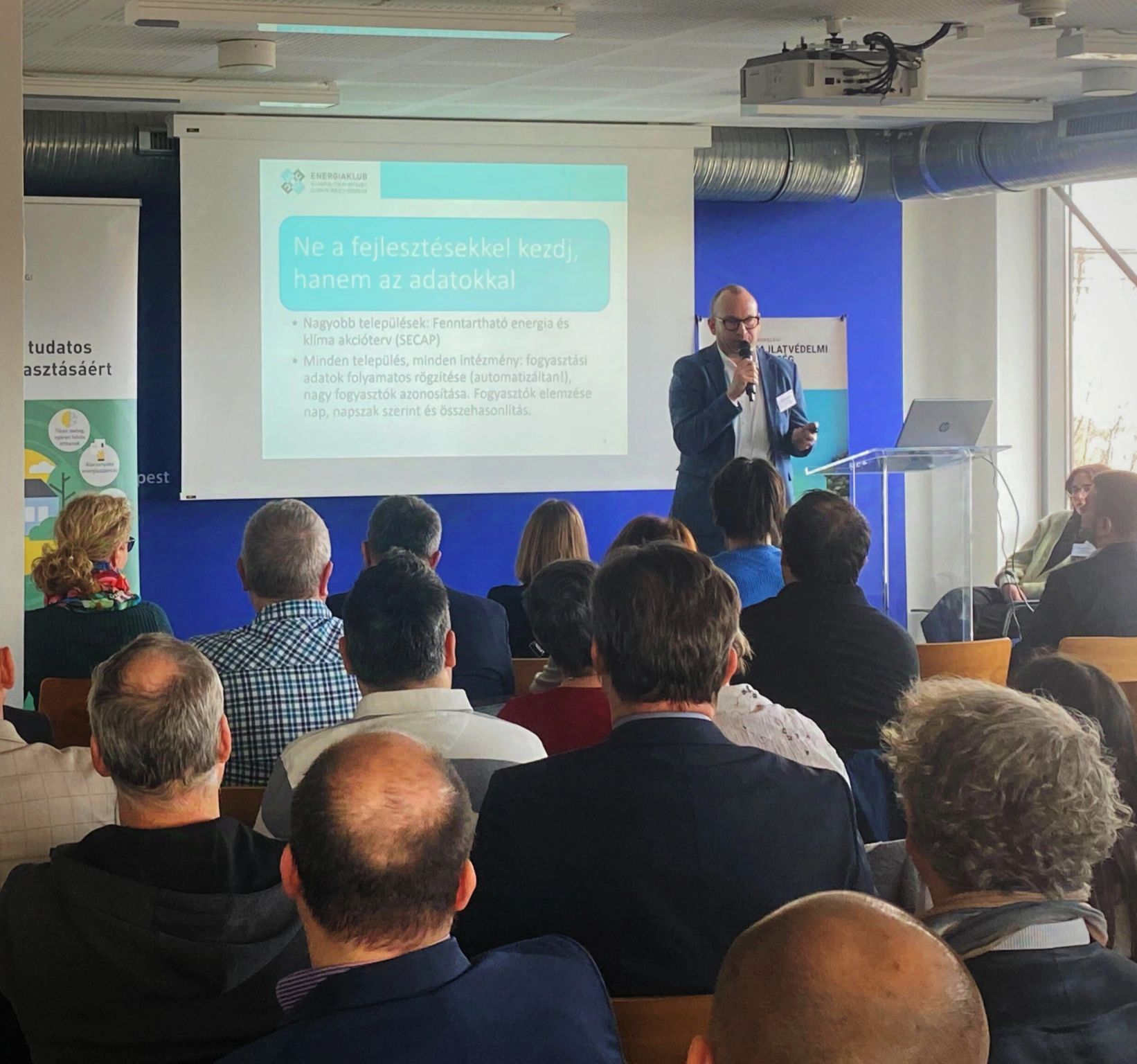
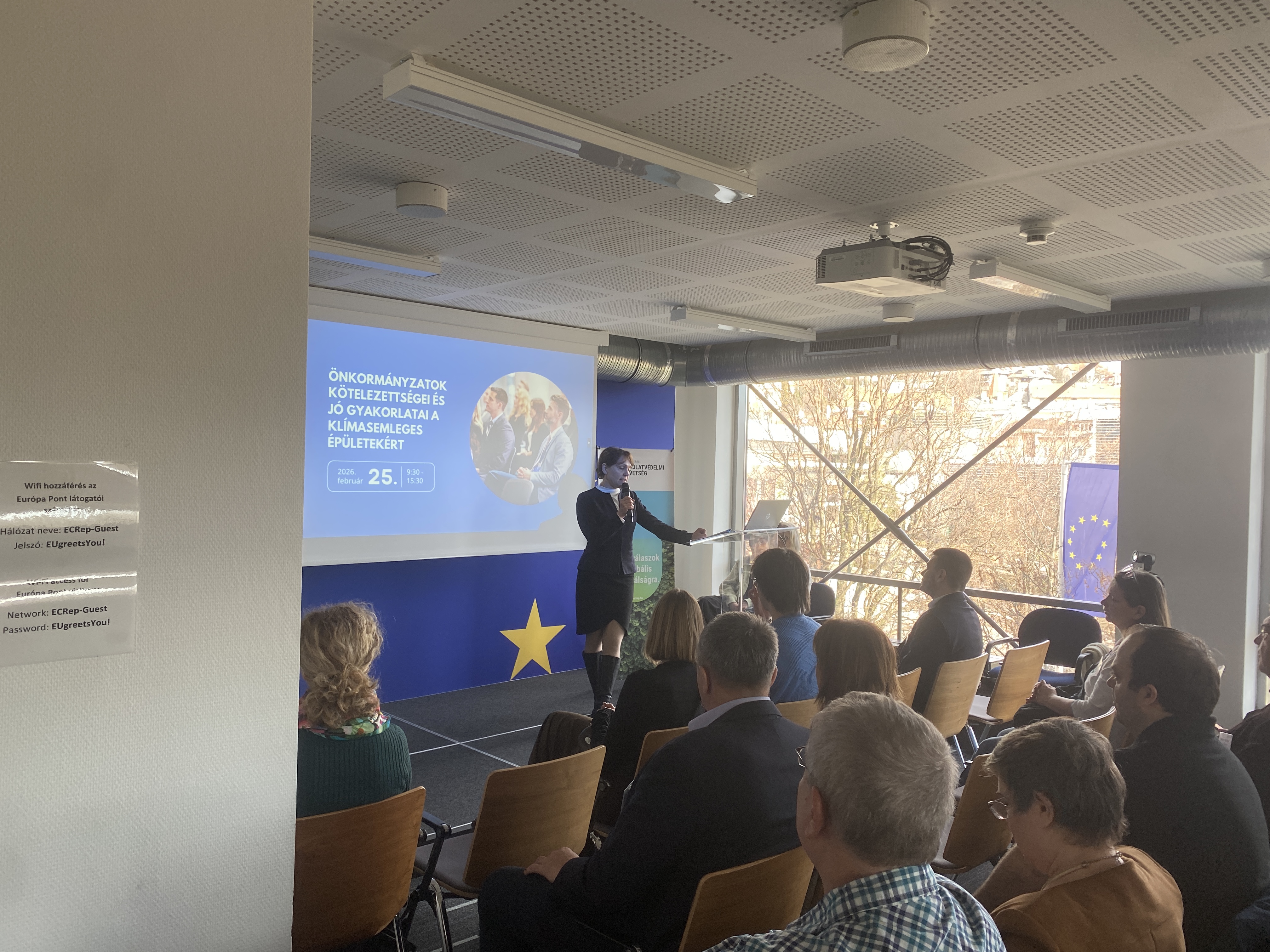
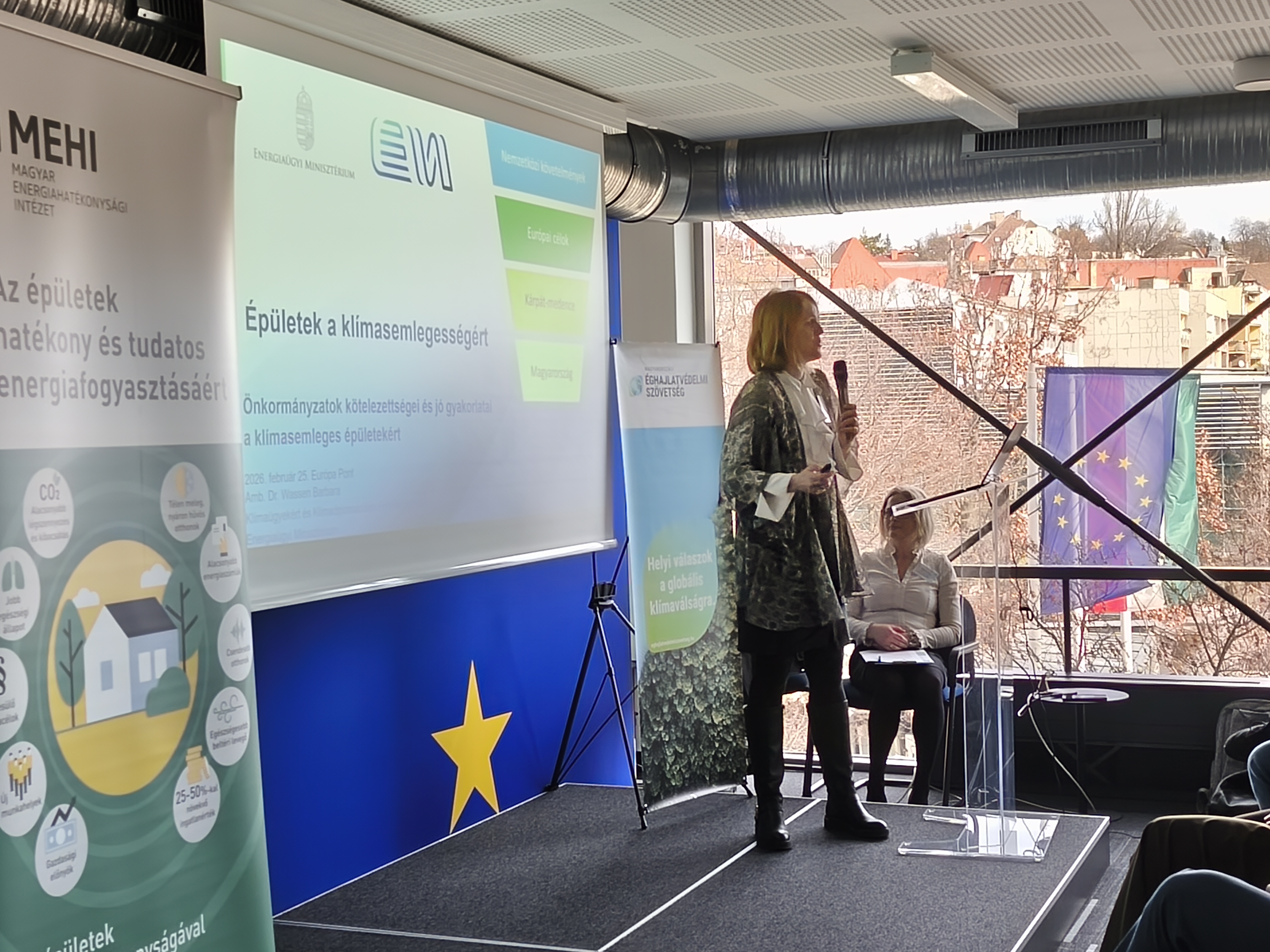
In recent years, the regulatory environment in Europe and Hungary has undergone significant changes: new energy efficiency standards, obligations, and design requirements have emerged that directly affect local governments and the local building stock. The aim of the conference titled “Local Governments’ Obligations and Best Practices for Climate-Neutral Buildings” was to provide municipalities with clear, inspiring, and practical guidance on the new tasks and requirements for buildings under the EU’s Fit for 55 legislative package.
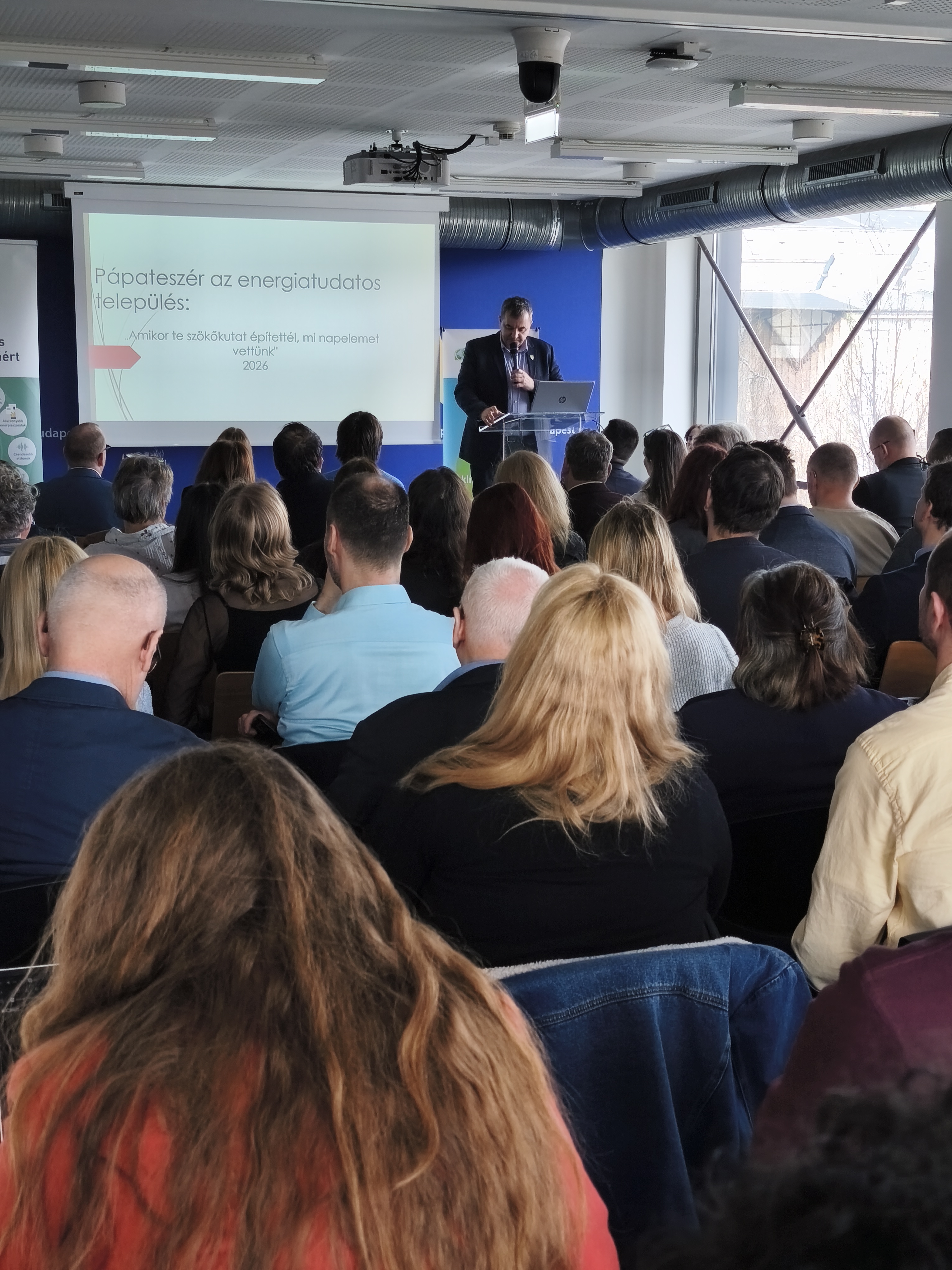
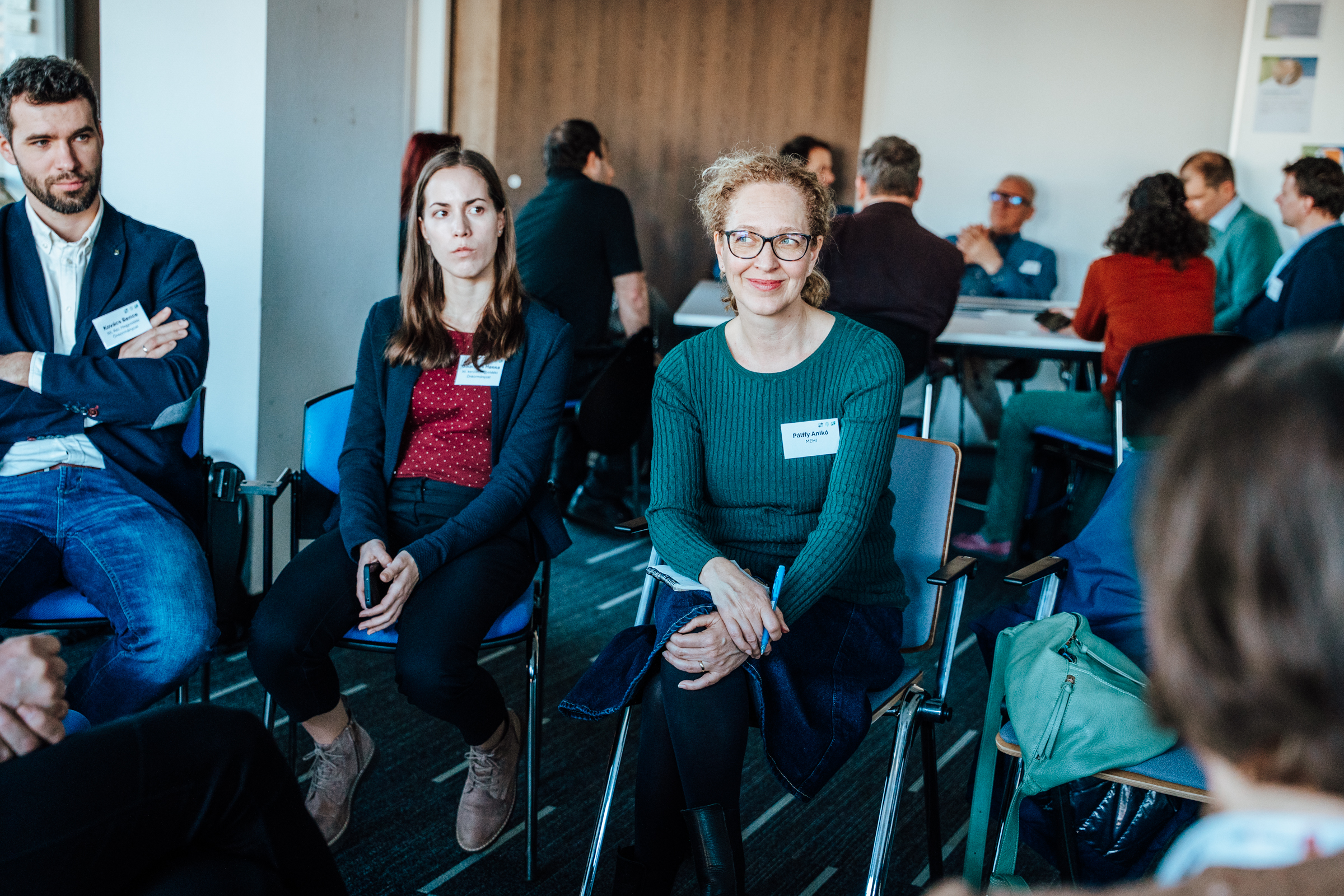
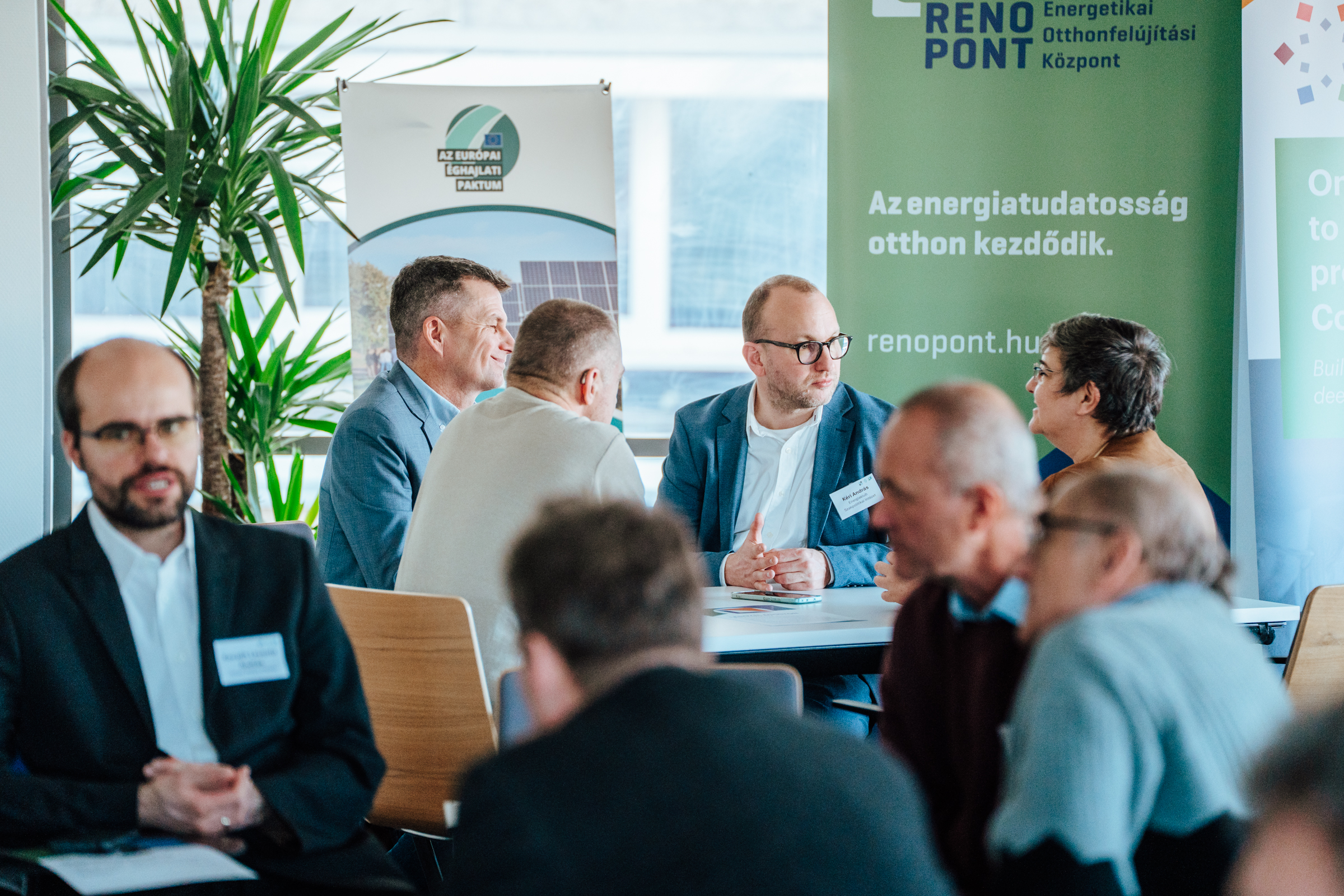
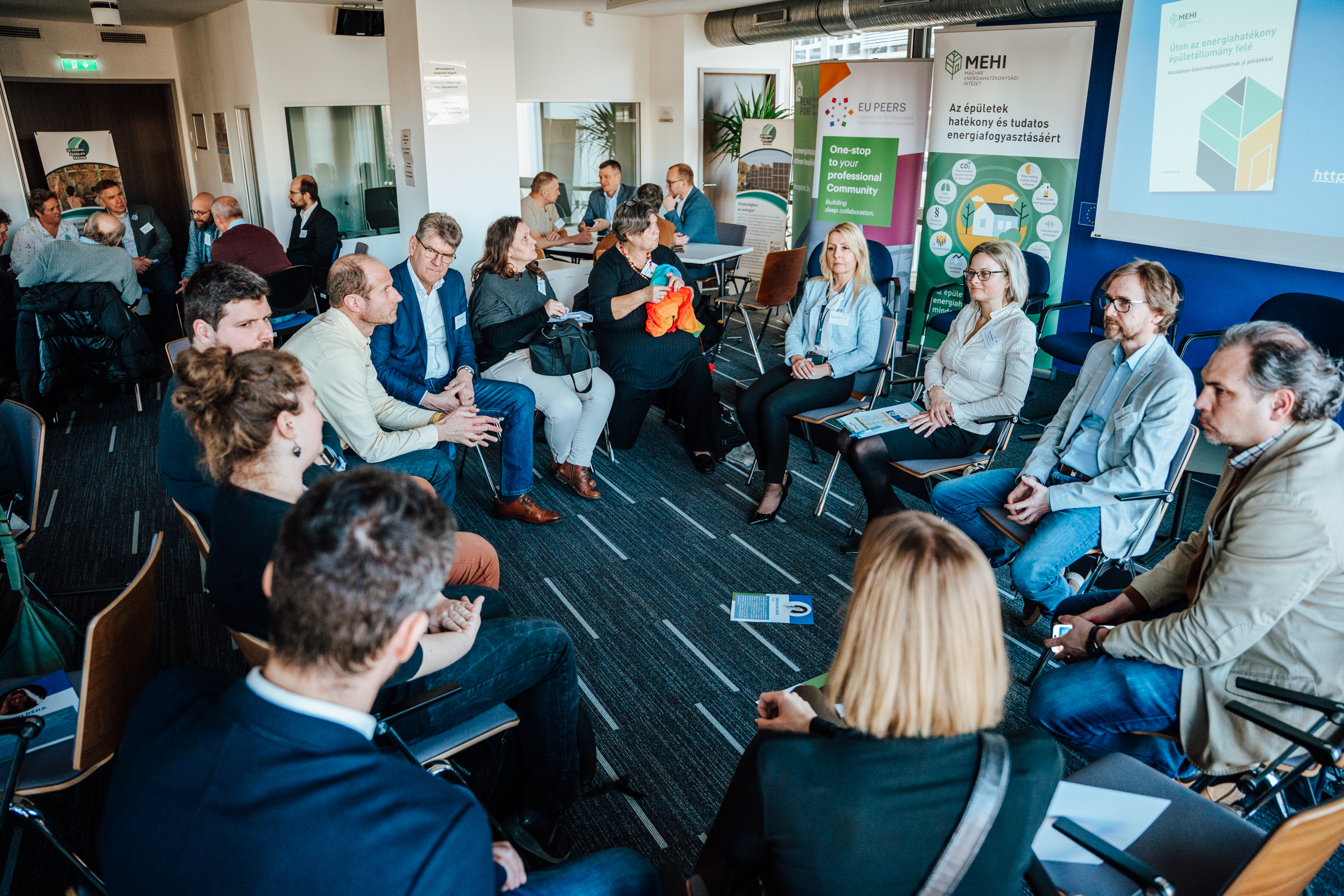
The first part of the event centered around expert presentations on the new EU regulations, global climate protection trends, the importance of planning and data, and the EU funds available to support these efforts, including EUCF financing. Following this, local government leaders presented best practices from their municipalities: good examples of energy efficiency, building renovation, and alternative financing from Szombathely, Pápateszér, Pécs, Újbuda, and Rákosmente were discussed, along with the lessons learned. After lunch, a roundtable discussion about building decarbonization took place, covering topics such as energy management, automation, the Energy Efficiency Obligation System, and residential incentives. The conference concluded with one-on-one discussions with experts in a World Café format.
The conference also featured a presentation of MEHI’s handbook for local governments on building energy management and energy efficiency. The handbook is based on more than 25 interviews, recommendations from professional organizations, and the experiences of local governments, which served as the basis for 20 case studies involving municipalities of various sizes and characteristics. These case studies showcase practical local government initiatives: quick, investment-free energy-saving measures, building renovation projects, public incentive programs, renewable-based heating system upgrades, and innovative financing solutions. The examples aim to provide inspiration and concrete guidance for local governments to plan and launch their own initiatives. The publication can be downloaded for free via this link.
The conference and the handbook focused on four areas where local governments have significant scope to improve the energy efficiency of buildings:
-
Improving energy management (monitoring, building automation, energy management),
-
Encouraging the renovation of municipal and residential buildings (exemplary renovations, local subsidy programs, awareness-raising, and one-stop advisory models)
-
Reducing heating energy consumption and transitioning to renewables (district cooling and heating planning, district heating development, geothermal and heat pump solutions)
-
Financing (domestic and EU funds, innovative financing models, including the application of the Energy Efficiency Obligation Scheme)
We are confident that the connections formed at the conference between local governments, professional organizations, and energy efficiency market players will lead to further collaborations, which will facilitate the implementation of new EU and domestic building energy regulations and obligations.