The importance of one-stop advisory services according to construction industry professionals
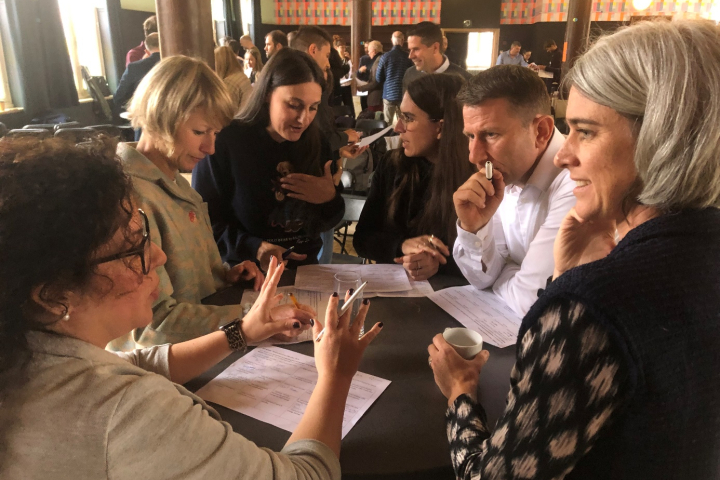
The importance of one-stop advisory services was also a key topic at the conference organized by the Non-Profit Limited Liability Company for Quality Control and Innovation in Building (ÉMI) for construction, banking, apartment building, and municipal professionals, which was held to mark the conclusion of the RenoInvest project. Those present agreed that one-stop shops, which provide technical, financial, and administrative assistance to renovation planners in one place, is an essential element in encouraging the modernization of both multi-unit buildings and municipal public buildings.
The event had two objectives: to provide an overview of the project's results so far, as well as to discuss the RENOINVEST proposal package, which addresses the main challenges of the domestic renovation system, with market and policy actors in a joint professional forum.
Recommendations for condominium renovations
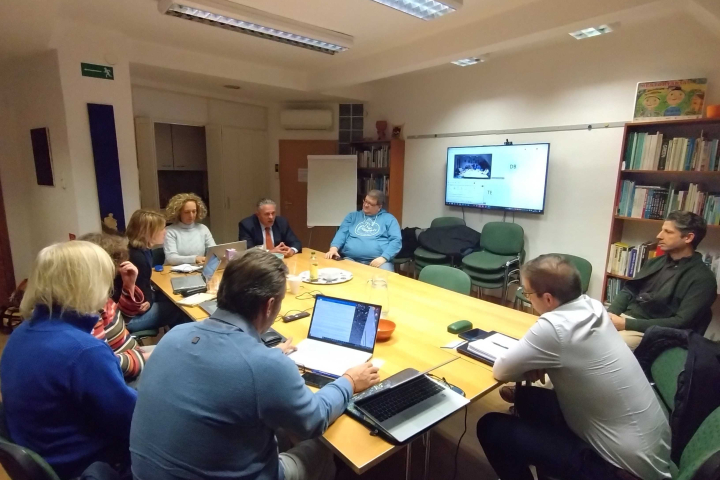
The package of proposals encouraging condominium modernization identified three interrelated pillars: the legal modernization of condominium operation and management, the creation of a financing environment based on long-term accessible and financially sound projects, and the strengthening of independent professional knowledge sharing and awareness raising. The package of proposals was discussed in a panel discussion, the aim of which was to allow as wide a professional community as possible to express their views on the Action Plan. The round table included representatives from the condominium management profession, the construction industry and contractors, banking and housing finance, public administration, energy communities, and the civil and climate policy spheres. Participants included Dr. Róbert Gyárfás (National Association of Apartment Buildings and Managers), Réka Hámori (Hungarian Banking Association), Ilona Illésné Szécsi (Hungarian Energy Efficiency Institute, Energiaklub Climate Policy Institute), László Koji (The National Federation of Hungarian Building Contractors), Mónika Kurucz (K&H Group), Edit Torda (Fundamenta Housing Fund Ltd.), Szilvia Szilber (Hungarian Association of Property Owners and Condominiums; Szilber Houses), Péter Nagy (Energy Control Kft.; Budapest Chamber of Engineers), Gyula Szalai, independent EKR expert, and Barbara Réthelyi (Ministry of Energy).
One of the strongest practical messages from the session about condominium block was related to the need for independent, one-stop shops and project preparation capacities. According to the participants, in many cases it is not the lack of technology or financing that is the main obstacle, but rather the lack of reliable, institutionalized, comprehensive professional support to guide property owners through the process, from the development of technical content through the coordination of grant and loan opportunities, to the supervision of implementation. International examples, including the Vilnius model and the Austrian renovation coach concept, confirmed that a brand-independent advisory network operating with municipal or state backing could significantly improve the quality of projects and the confidence of residential communities, thereby increasing their willingness to renovate.
During the conference, the audience was also able to express their views on the details of one-stop services: by filling out a short questionnaire, they could express their opinion on which organization should provide independent one-stop advisory services, what geographical coverage it should have, who should finance it, and what services it should provide to different target groups (house or apartment owners, condominium representatives, energy-poor households).
Summary
The condominium and municipal thematic roundtables ultimately arrived at the same strategic conclusion: without a modern and predictable legal environment, market and municipal confidence will not strengthen; without long-term, predictable, combined financing instruments, investment decisions will not be made; and without adequate independent advisory and project preparation capacities, programs cannot be transformed into transparently prepared, well-founded renovation projects.
The message of the event thus went far beyond a project milestone: the meaningful acceleration of condominium and municipal renovations depends not on a single intervention, but on the coordinated renewal of legal, financial, and knowledge-sharing conditions. The partners of the RENOINVEST project are continuing to work on turning the proposals into concrete, feasible measures, thereby contributing to the creation of a more predictable and efficient renovation environment.
The presentations from the event and the program is available at the following link: https://www.archenerg.eu/renoinvest/hirek/renoinvest-zaro-magyar-nemzeti-kerekasztal.html